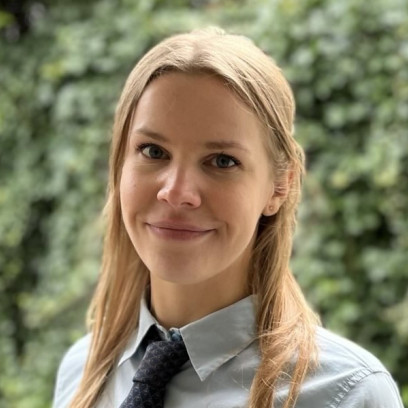
Nanne Kukkonen
I have conducted end-to-end research in cognitive psychology and neuroscience, studying how people make decisions and translate them into action. My work spans behavioral experimentation, neuroimaging, and eye-tracking, from how the brain dynamically allocates effort based on changing demands and rewards, to how motivation shapes real-world behaviors like pro-environmental action.
Publications
Hall, J. M., Kukkonen, N., Prinea, E., Schomaker, J., & Krebs, R. M. (2026). The Role of Locus Coeruleus and Substantia Nigra/Ventral Tegmental Area activity in Reward and Salience Processing: A High-Resolution fMRI Study. bioRxiv 2026.10.08.752674. [preprint]
Kafkas, A., Baek, H. Y., Kukkonen, N., & Montaldi, D. (2026). Hippocampal-midbrain interactions link encoding-related pupil response to memory success. bioRxiv, 2026-08. [preprint]
Chai, M., Ikink, I., Mattioni, S., Benavides, R. A., Kukkonen, N., Senoussi, M., ... & Braem, S. (2026). Parallel control of conjunctive and compositional representations supports dynamic task preparation. bioRxiv, 2026-01. [preprint]
Kukkonen, N., Braem, S., Eayrs, J., Chai, M., Mattioni, S., Steendam, S., ... & Krebs, R. M. (2026). Distinct roles of anterior cingulate and subcortical regions supporting effort evaluation versus preparation. [preprint]
Kukkonen, N., Lange, F., Van den Bossche, C., & Krebs, R. M. (2025). Pro-environmental decisions are hampered by their opportunity costs – evidence from effort-based decision-making. Journal of Environmental Psychology, 102843. [article]
Kukkonen, N., Braem, S., Allaert, J., Eayrs, J. O., Prutean, N., Steendam, S. T., ... & Krebs, R. M. (2025). The cost of regulating effort: reward and difficulty cues with longer prediction horizons have a stronger impact on performance. Journal of Cognition, 8(1), 9. [article]
Eayrs, J. O., Kukkonen, N., Prutean, N., Steendam, S. T., Boehler, C. N., Wiersema, J. R., ... & Notebaert, W. (2024). Attentional set and explicit expectations of perceptual load determine flanker interference. Journal of Experimental Psychology: Human Perception and Performance, 50(7), 769. [article]
Prutean, N., Vermeylen, L., Kukkonen, N., Steendam, S. T., Eayrs, J. O., Krebs, R. M., ... & Notebaert, W. (2024). Mind the instructions: Reward cues are liked first, wanted later. Cognition, 251, 105885. [article]
Steendam, S. T., Prutean, N., Clybouw, F., Eayrs, J. O., Kukkonen, N., Notebaert, W., ... & Boehler, C. N. (2024). Compensating for the mobile menace with extra effort: A pupillometry investigation of the mere presence effect of smartphones. Biological Psychology, 193, 108893. [article]
Prével, A., Krebs, R. M., Kukkonen, N., & Braem, S. (2021). Selective reinforcement of conflict processing in the Stroop task. PloS one, 16(7), e0255430. [article]